
Product guidance
How to Improve AI Voice Agent Accuracy with Caller Intelligence
Improve AI voice agent accuracy by combining pre-call caller intelligence with audio sensitivity tuning for natural conversation flow.
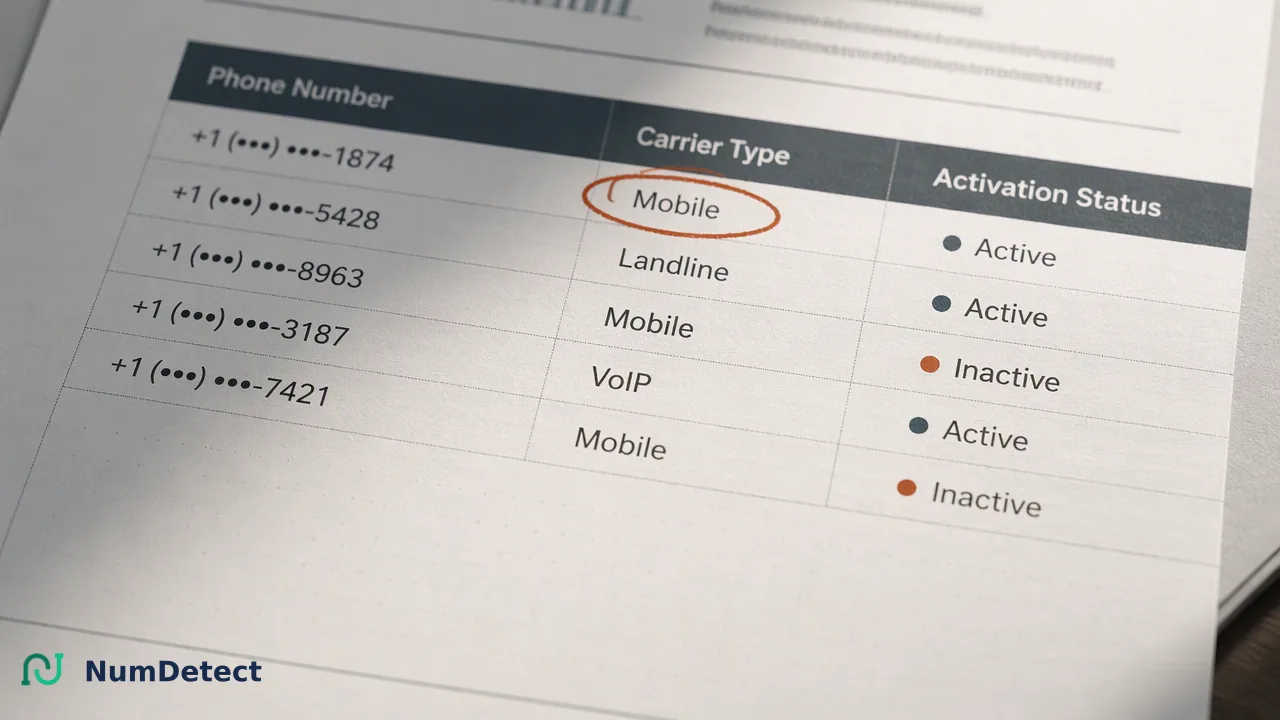
Learn how pre-call intelligence, carrier detection, and audio sensitivity tuning help AI voice agents manage interruptions, handle background noise, and improve conversation flow.
AI voice agent accuracy improves when teams combine precise audio threshold tuning with pre-call caller intelligence. Automated voice systems often struggle to distinguish genuine user speech from background noise, brief backchannels, or sudden interruptions. Integrating contextual data—such as carrier context and documented phone activation signals—enables teams to prepare and segment contact lists before campaign execution. Pre-call data informs routing paths and helps engineers set appropriate speech recognition sensitivity, end-of-turn thresholds, and barge-in policies. As a result, automated voice systems maintain natural conversation flow, reduce false-positive interruptions, and minimize awkward dialogue pauses across large outbound and inbound voice operations.
Speech Recognition Challenges in Automated Voice Interactions
Conversational AI voice agents must interpret spoken input while managing real-time speech dynamics. In multi-turn dialogue, agents frequently encounter three operational hurdles: unexpected barge-in interruptions, conversational backchanneling (such as short affirmations like "uh-huh" or "yes"), and persistent ambient noise. If an automated agent interprets every ambient sound or brief listener affirmation as a conversational turn, it halts its synthesized speech prematurely, creating jarring conversational pauses. Conversely, if sensitivity thresholds are set too low, the agent fails to yield when a caller genuinely wants to interrupt. Balancing voice activity detection sensitivity and end-of-turn delay thresholds is therefore critical. Configuring these parameters properly helps speech recognition engines differentiate between accidental background sound and genuine user input, preserving a steady dialogue cadence.
The Strategic Role of Contextual Caller Intelligence
Audio signal processing alone cannot resolve every conversational ambiguity. Pre-call contextual intelligence provides additional background that helps teams anticipate call environments. For instance, knowing whether an endpoint is associated with a mobile network, a fixed landline, or a virtual VoIP service gives valuable context regarding potential acoustic and network conditions. VoIP connections may introduce varying packet latencies or compression artifacts, while mobile callers are more likely to experience transient background sounds like traffic, wind, or office chatter. Applying carrier context during list preparation allows voice engineering teams to segment their outreach queues. Calls routed through mobile segments can be pre-assigned speech recognition models with higher noise filtering and slightly longer turn-detection windows, mitigating accidental barge-in triggers.
Preparing Contact Lists with Asynchronous Bulk Insights
Rather than relying on real-time lookups during dial execution, high-volume automated operations benefit from preparing data asynchronously. NumDetect provides an asynchronous bulk phone-number insight platform designed for teams organizing large datasets. Through bulk file tasks, teams submit files containing 1,000 to 100,000 records in TXT or CSV format alongside a single ISO country code. NumDetect processes these datasets in the background, returning specific diagnostic signals such as Phone Number Validation activation signals and Global Carrier Detection details. China mainland numbers are excluded from this workflow. By auditing database lists ahead of time, development teams isolate disconnected or invalid records, reducing wasted agent dialing capacity and establishing clean lists formatted for targeted voice interaction profiles.
Workflow: Aligning Pre-Call Signals to Agent Configuration
Integrating bulk insights into conversational voice systems follows a structured, multi-step pipeline:
- Submit File Tasks: Teams send batch files to the task submission endpoint (
POST /api/v1/bulk-tasks) containing normalized records and monitor processing status viaGET /api/v1/bulk-tasks/{id}until reaching success. 2. Evaluate Activation Signals: Filter out unactivated lines to preserve agent capacity, while noting that an activated signal supports list hygiene without guaranteeing call completion. 3. Segment by Carrier Context: Separate mobile, landline, and virtual numbers to establish appropriate routing groups. 4. Map Voice Agent Parameters: Assign tailored conversational policies to each group. Allocate higher speech detection thresholds and resilient barge-in delays to mobile segments, while applying tighter turn-taking thresholds to clean fixed lines. 5. Review Activity Context: Use Number Activity signals to prioritize contact schedules within high-volume outreach campaigns without inferring specific online hours.
FAQ
How does carrier detection improve AI voice agent performance?
Carrier detection provides carrier context that helps teams categorize contact records before running automated calling campaigns. Mobile lines, virtual VoIP numbers, and landlines frequently exhibit different audio characteristics, latency profiles, and background acoustic environments. By reviewing carrier information ahead of time, engineering teams can segment lists, assign dedicated agent sensitivity profiles, and adjust speech recognition thresholds to handle variations in call environment and audio transmission quality more effectively.
Why is asynchronous bulk processing useful for AI voice agent data?
Asynchronous bulk processing allows operations teams to prepare thousands of contact records prior to launching automated outreach campaigns. Platforms like NumDetect process lists between 1,000 and 100,000 numbers via file tasks, returning activation and carrier signals. This pre-call enrichment gives systems the necessary context to organize campaigns, route numbers to appropriate voice queues, and apply tailored speech models without introducing lookup latency during live call execution.
Learn More
Choose the product information that fits the next step in your workflow.