
Product guidance
RCS vs. WhatsApp: Choosing the Right Messaging Channel for Your Customer Base
Learn how to choose between RCS and WhatsApp using asynchronous bulk phone-number insights, carrier detection, and data hygiene for better messaging strategy.
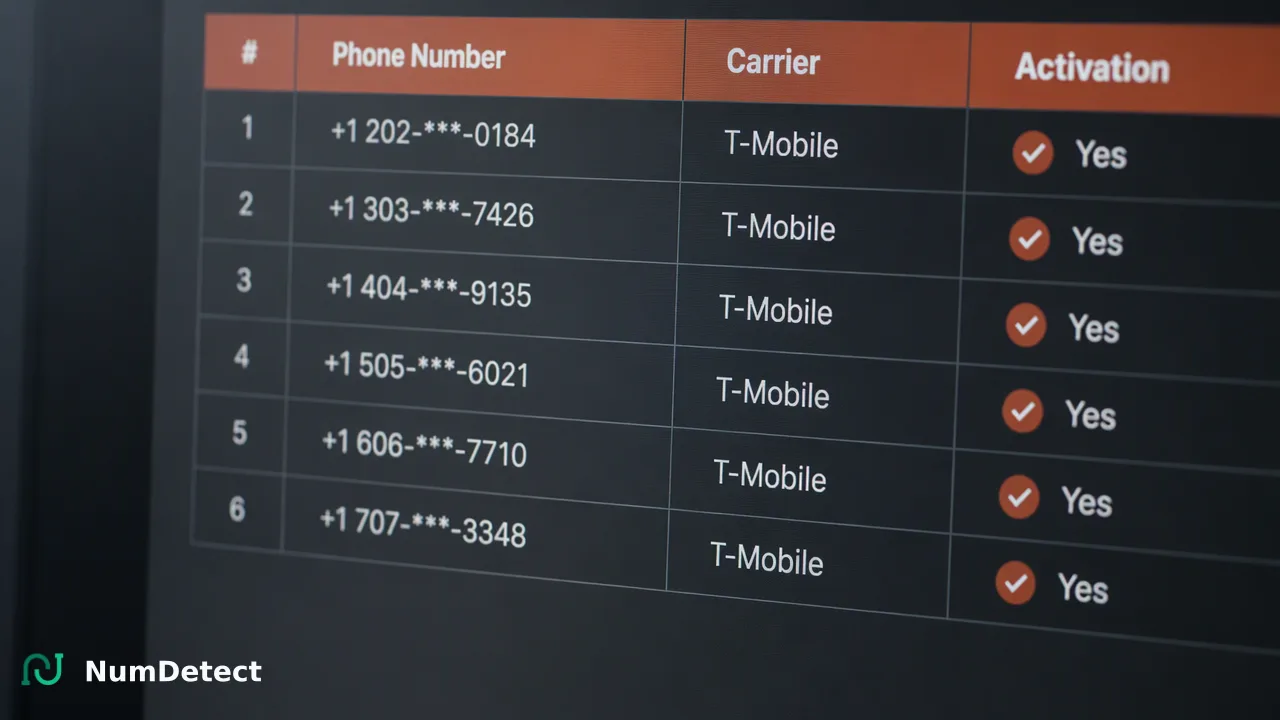
Explore how to choose between RCS and WhatsApp for business messaging by leveraging asynchronous bulk phone-number insights and pre-outreach data hygiene.
Choosing between RCS and WhatsApp requires balancing regional market penetration with technical requirements. RCS offers native integration for broad reach without requiring app downloads, while WhatsApp provides specialized engagement tools and high adoption in specific global markets. Regardless of the selected channel, success depends on pre-outreach data hygiene. Organizations must use carrier identification and activation signals to ensure contact lists are segmented and routed effectively before a campaign begins. By processing records through an asynchronous bulk phone-number insight platform, teams can separate dormant records from active ones, apply carrier context for regional analysis, and prioritize operations. This data-driven preparation helps organizations align their messaging strategy with actual audience reachability.
The Strategic Importance of Messaging Channel Selection
Channel selection depends heavily on regional dominance and user behavior rather than a universal approach. Businesses evaluating their communication strategy must analyze where their target audience resides and how those users prefer to interact with brands. RCS (Rich Communication Services) upgrades standard SMS with rich media and interactive features, offering native integration directly into mobile operating systems. This native presence means organizations can reach users without requiring them to download a separate application, making RCS highly effective for broad, frictionless outreach. Conversely, WhatsApp Business requires app installation but commands massive user bases in specific international markets. Organizations must align their channel choice with these regional realities. A messaging strategy that relies on WhatsApp in a region dominated by native SMS and RCS will struggle to gain traction. Therefore, understanding the geographic distribution of a customer base is the first step in determining which platform will yield the most effective engagement.
Evaluating Technical and Operational Requirements
Beyond regional reach, organizations must evaluate the technical and operational requirements of each messaging platform. WhatsApp provides extensive business tools, including structured templates, automated replies, and rich catalog integrations, which drive high engagement in specific global markets. However, it requires users to actively install the application and register an account. RCS bypasses the installation barrier by operating natively on supported devices, allowing teams to deliver rich media, suggested actions, and verified sender branding directly to the default messaging inbox. To navigate these differences, businesses need accurate intelligence about their contact lists. Line-type identification helps businesses route messages to the most cost-effective and reachable channel. If a segment of a contact list primarily uses devices or carriers that do not support RCS, teams can route those numbers to alternative channels. Understanding these technical constraints ensures that organizations do not waste resources attempting to deliver rich messages to incompatible devices or unregistered users.
The Role of Data Hygiene in Messaging Strategy
Verification of phone numbers is a prerequisite for effective messaging across any channel. Before initiating outreach on RCS or WhatsApp, teams must ensure their contact lists are accurate and properly formatted. Phone number validation and carrier detection are essential steps for ensuring that messaging campaigns reach the intended audience efficiently. Using an asynchronous bulk phone-number insight platform, organizations can process large lists to retrieve an activated signal. Additionally, Global Carrier Detection returns carrier context for phone-number records while accounting for number portability and source variation. This carrier information informs regional analysis and helps teams understand the underlying network infrastructure of their audience. By identifying the carrier, organizations can make informed decisions about routing and channel compatibility, ensuring that their messaging strategy is built on a foundation of clean, actionable data.
Optimizing Campaigns with Asynchronous Bulk Insights
To prepare large number lists for cleaning, segmentation, and CRM enrichment, developers and operations teams rely on asynchronous bulk workflows rather than real-time single-number lookups. NumDetect provides an asynchronous bulk phone-number insight platform designed specifically for this operational prioritization. Teams submit a TXT or CSV file containing one number per line, with batches ranging from 1,000 to 100,000 valid numbers and a single ISO country or region code per task. The workflow utilizes the POST /api/v1/bulk-tasks endpoint to submit the file and the GET /api/v1/bulk-tasks/{id} endpoint to retrieve its status, which transitions through public states of processing, success, or failed. This bulk processing capability allows organizations to efficiently evaluate massive datasets without managing complex concurrent API connections. Note that China mainland numbers are not supported by this bulk phone-number task workflow. By integrating this asynchronous process, teams can systematically append carrier context and activation signals to their CRM before launching large-scale RCS or WhatsApp campaigns.
Segmenting Audiences Using Activity and Value Signals
Beyond basic validation and carrier detection, organizations can refine their messaging strategy by incorporating additional data signals for operational prioritization. The Number Activity capability returns an activity signal to support prioritization and segmentation without reporting specific activity time or frequency. This helps teams rank records for outreach. For premium segmentation, the High-Value Users capability returns a potential high-value signal based on premium-device characteristics and recent network activity. By combining these asynchronous bulk insights, teams can segment their audience effectively. For example, highly active numbers with premium characteristics might be prioritized for rich WhatsApp engagement, while broader segments receive native RCS communications, optimizing the overall messaging spend and strategy.
FAQ
How does carrier identification improve messaging ROI?
Carrier identification helps organizations route messages to the most cost-effective and reachable channel. By using Global Carrier Detection, teams receive carrier context for phone-number records, accounting for number portability. This insight allows businesses to segment their lists based on network infrastructure, ensuring that RCS or SMS campaigns are directed only to compatible carriers. This targeted routing reduces wasted spend on undeliverable messages and informs regional analysis for better campaign planning.
Why is list cleaning necessary before choosing a messaging channel?
Verification of phone numbers is a prerequisite for effective messaging because attempting to reach dormant or invalid numbers wastes resources. Using an asynchronous bulk phone-number insight platform to retrieve an activated signal helps teams separate inactive records from active ones. This pre-outreach data hygiene ensures that organizations base their channel selection—whether RCS or WhatsApp—on an accurate understanding of their reachable audience, supporting better CRM enrichment and operational prioritization.
How do teams use activity signals to prioritize outreach?
Teams use the Number Activity capability to retrieve an activity signal that supports prioritization and segmentation. While this signal does not report specific activity time or frequency, it helps organizations rank their contact lists. By processing files through an asynchronous bulk workflow, teams can identify which segments of their audience are more likely to be reachable, allowing them to allocate premium messaging resources like WhatsApp to the highest-priority records.