
Product guidance
Static vs. Current Carrier Lookup: Why Your SMS Routing Needs Real-Time Data
Learn why static numbering plans fail SMS routing and how current carrier data supports delivery efficiency by accounting for mobile number portability.
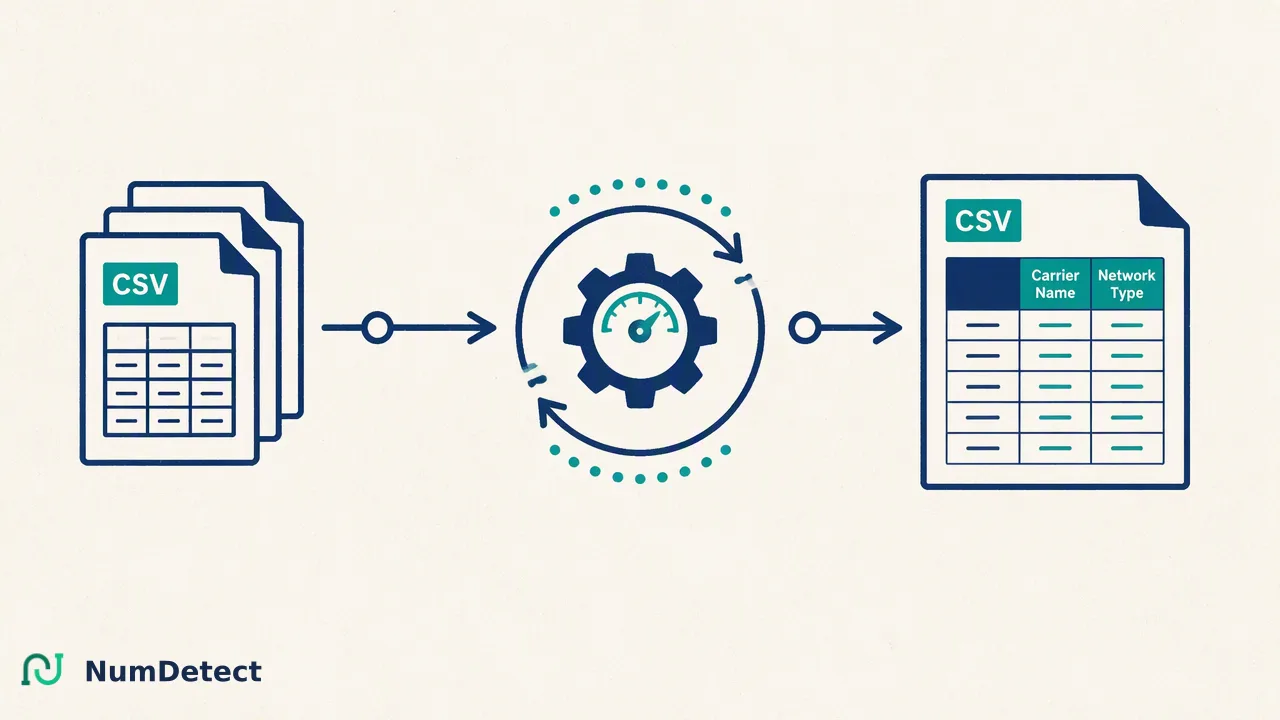
An in-depth guide on the limitations of static carrier databases for SMS routing, the impact of mobile number portability, and how asynchronous bulk carrier detection supports operational efficiency.
Static carrier databases rely on original numbering plan allocations, which fail to account for mobile number portability (MNP). As subscribers switch between mobile network operators, static data becomes obsolete, leading to routing inefficiencies and increased operational costs. Relying solely on allocated numbering blocks means organizations often send messages to the wrong network gateway. Using current carrier lookup services helps teams base their routing decisions on the actual serving network rather than historical assignments. By appending accurate carrier context to international lists, organizations can support better SMS delivery workflows and operational precision. Current carrier data informs CRM hygiene and regional analysis, providing the necessary visibility to navigate modern telecommunications networks effectively without treating carrier data as subscriber identity.
The Limitation of Static Carrier Data
Telecommunications networks originally assigned phone numbers in sequential blocks to specific operators. Static carrier databases rely on these initial numbering plan allocations to determine which network owns a particular number. While this method provides a baseline for formatting and regional identification, it does not reflect the current network status of a phone number. The primary limitation of static data is its inability to account for mobile number portability (MNP). MNP is the regulatory requirement that allows a subscriber to retain their phone number when switching between different mobile network operators. Because subscribers frequently port their numbers to new providers, the original allocation block no longer dictates the actual serving network. Consequently, static records become unreliable for modern routing workflows. Organizations that depend entirely on static numbering plans operate with stale information, which misaligns with the reality of dynamic telecommunications infrastructure. Current carrier context is necessary to understand the actual network responsible for a given number at the time of processing.
Why Mobile Number Portability Disrupts SMS Routing
Stale carrier data directly impacts the efficiency of SMS routing operations. When an organization attempts to route a message using an outdated static database, the system directs the payload to the original allocated carrier rather than the current serving network. This mismatch leads to routing inefficiencies, increased latency, and potential delivery failures. The original carrier must either reject the message or attempt to forward it to the correct network, which often incurs additional transit fees and complicates delivery receipts. Accurate routing requires visibility into the actual serving network. By understanding which operator currently holds the number, technical teams can optimize their routing tables and select the most direct path for their SMS traffic. This visibility helps organizations manage operational costs by avoiding unnecessary transit hops and reducing the volume of misrouted messages. Furthermore, current carrier data supports better regional analysis and operational prioritization, giving teams the context needed to segment their international lists accurately based on the true network destination.
Implementing a Tiered Data Strategy
Managing large-scale SMS operations requires a structured approach to data hygiene. Organizations can implement a tiered data strategy that uses bulk insights to append context to international lists before initiating high-stakes routing. In this workflow, teams use bulk carrier detection to process large volumes of E.164-formatted records asynchronously. This step identifies the current carrier and underlying network data, which can then be integrated directly into CRM systems and routing engines. By separating the data enrichment phase from the actual message transmission, organizations can clean and segment their lists efficiently. It is important to note that carrier data provides network context, not subscriber identity or device status. A tiered strategy uses this network context to inform internal decisions, such as selecting the appropriate aggregator or routing path for specific regions. This approach supports operational prioritization and helps teams maintain accurate CRM records without relying on real-time, single-number lookups during the critical path of message dispatch.
Operationalizing Carrier Insights with NumDetect
NumDetect provides an asynchronous bulk phone-number insight platform designed for teams preparing large number lists for cleaning, segmentation, and CRM enrichment. The platform supports regional analysis by appending carrier context to E.164-formatted records through its Global Carrier Detection capability. This workflow accounts for number portability and source variation, returning carrier information that helps teams optimize their routing strategies. NumDetect operates strictly as an asynchronous bulk workflow, not a real-time single-number lookup tool. Developers integrate the platform using specific API endpoints: submitting a task via POST /api/v1/bulk-tasks and retrieving its status via GET /api/v1/bulk-tasks/{id}. The public states for these tasks are processing, success, and failed. Each task requires a TXT or CSV file containing 1,000 to 100,000 valid numbers, with one number per line, and a single ISO country or region code. Note that China mainland numbers are not supported by this bulk workflow. By utilizing these asynchronous tasks, organizations can systematically enrich their databases with current carrier context.
FAQ
Why is static carrier data unreliable for SMS routing?
Because it fails to track mobile number portability, static data often points to the wrong network gateway. This stale information leads to routing inefficiencies, increased transit costs, and potential delivery failures when sending SMS messages. Organizations need current serving network data to support accurate routing decisions.
How does mobile number portability affect carrier lookups?
Mobile number portability allows subscribers to keep their phone numbers when switching between different mobile network operators. This regulatory requirement means that a number's original allocation block no longer dictates its current network. Carrier lookups must account for portability to identify the actual serving network, providing the accurate context needed for CRM hygiene, regional analysis, and operational prioritization.
Can teams use NumDetect for real-time single-number carrier lookups?
No, NumDetect is an asynchronous bulk phone-number insight platform, not a real-time single-number lookup tool. The platform is designed for processing large lists of 1,000 to 100,000 valid numbers via a TXT or CSV file. Teams submit tasks using the POST /api/v1/bulk-tasks endpoint and retrieve the status asynchronously, which supports bulk CRM enrichment and list segmentation workflows.
What data does Global Carrier Detection provide for international lists?
Global Carrier Detection returns carrier information for phone-number records while accounting for number portability and source variation. This capability appends network context to E.164-formatted lists, which helps organizations with regional analysis and operational prioritization.